

 Posted by
 Made in China 2025 (MIC 25), unveiled in 2015, is a strategic blueprint issued by the Chinese government with the ambitious goal of transforming China from a “manufacturing giant” into a global leader in high-tech and advanced manufacturing sectors. This blog delves into the core elements of MIC 25, explores its potential implications, and analyzes the ongoing debate surrounding this far-reaching industrial policy.
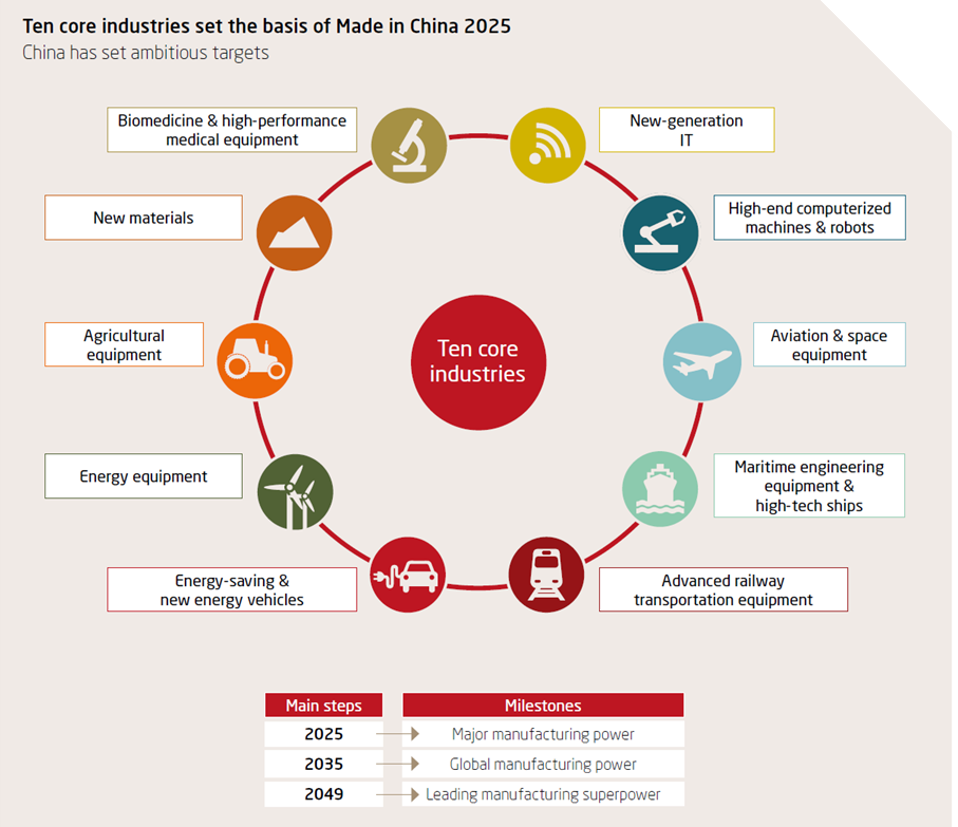
The Pillars of MIC 25: A Ten-Year Roadmap
MIC 25 lays out a ten-year roadmap for China’s industrial development, focusing on ten key sectors:
- Information technology (IT) next generation
- Advanced machine tools and robotics
- Aerospace equipment
- Semiconductor and integrated circuits
- New energy vehicles
- Materials science
- Advanced biopharmaceuticals
- Marine equipment and high-tech ships
- Advanced rail transportation
- Power equipment
The strategy emphasizes domestic innovation, self-sufficiency in core technologies, and upgrading China’s manufacturing capabilities across these critical industries.
Key Goals of MIC 25:
- Technological Independence: Reduce reliance on foreign technology and intellectual property by fostering domestic innovation and research & development (R&D) capabilities.
- Manufacturing Upgrade: Shift from low-cost, labor-intensive manufacturing to high-value, technology-driven production.
- Global Leadership: Establish China as a dominant player in the global high-tech manufacturing arena.
- Economic Growth: Drive economic growth through innovation and increased productivity in these key sectors.
Potential Implications of MIC 25
- Increased Competition: The success of MIC 25 could intensify competition for established players in the global tech and manufacturing sectors.
- Innovation Surge: Increased investment in R&D could lead to significant advancements in Chinese technology.
- Geopolitical Tensions: The emphasis on self-sufficiency might raise concerns about protectionism and potential trade conflicts.
- Disruption of Supply Chains: The reshaping of China’s manufacturing landscape could lead to disruptions in established global supply chains.
The Debate Surrounding MIC 25
MIC 25 has sparked a global debate, with both potential benefits and concerns raised:
- Supporters: View MIC 25 as a catalyst for Chinese innovation, technological advancements, and a more balanced global economic landscape.
- Critics: Express concerns about unfair competition due to potential government subsidies, intellectual property theft, and a lack of market transparency.
- Uncertainties: The long-term success of MIC 25 hinges on factors like China’s ability to foster innovation, navigate geopolitical tensions, and adapt to a rapidly evolving technological landscape.
Conclusion: A Policy with Global Repercussions
Made in China 2025 is a significant industrial policy with the potential to reshape the global manufacturing landscape. Understanding its goals, potential implications, and the ongoing debate surrounding it is crucial for businesses and policymakers worldwide. As China strives to become a leader in high-tech manufacturing, the world will be watching with keen interest to see how this ambitious strategy unfolds.