

 Posted by
 China, a land rich in history, culture, and economic prowess, presents a captivating prospect for businesses seeking international expansion. However, navigating the intricacies of Chinese business etiquette is crucial for forging successful partnerships and avoiding cultural faux pas. This guide equips you with essential do’s and don’ts to pave the way for a smooth and prosperous business venture in China.
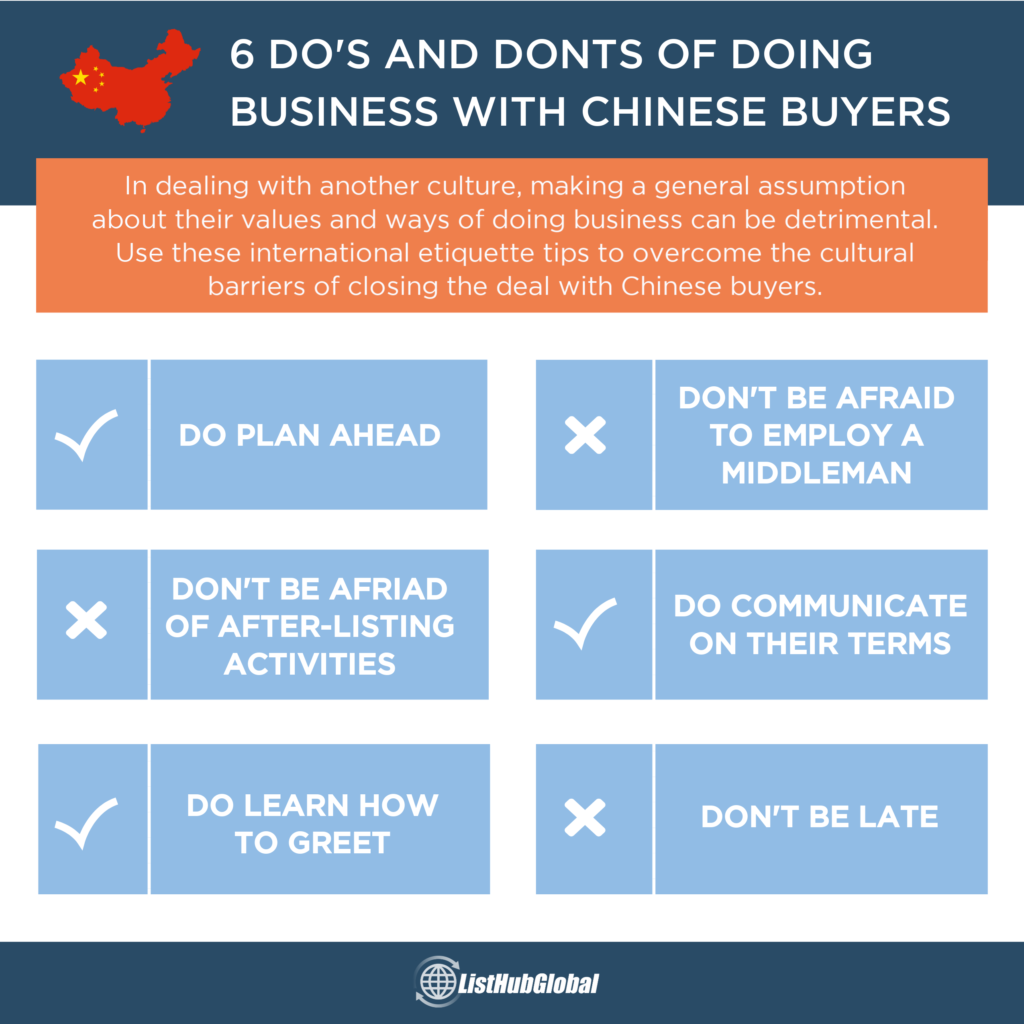
Do:
- Build Relationships (Guanxi): Do prioritize relationship building. Invest time in getting to know your counterparts, their companies, and their interests. Patience and reciprocity are key to fostering guanxi, the concept of trust and obligation that underpins successful Chinese business relationships.
- Respect Hierarchy: Do acknowledge hierarchical structures within Chinese companies. Address senior officials first and show deference to those with more experience.
- Embrace Indirect Communication: Do be mindful that Chinese communication can be indirect. Pay attention to non-verbal cues and avoid being overly assertive. Opt for a collaborative approach and focus on finding common ground.
- Present a Business Card: Do exchange business cards with a slight bow and receive them with both hands. Present your card in Chinese if possible. Treat business cards with respect, as they represent an extension of one’s identity.
- Punctuality Matters: Do be punctual for meetings. While some flexibility might be expected, arriving on time demonstrates respect and professionalism.
- Be Patient: Do understand that negotiations may take longer than you’re accustomed to. Patience and a willingness to compromise are essential for reaching mutually beneficial agreements.
- Dress Professionally: Do dress professionally for meetings and business events. Conservative attire conveys respect and seriousness about your business proposition.
Don’t:
- Criticize or Publicly Shame: Don’t criticize your Chinese counterparts or their business practices in public. Maintain a respectful tone and address any concerns privately.
- Disrupt Harmony: Don’t raise your voice or interrupt during conversations. Maintain a calm and respectful demeanor to preserve a harmonious atmosphere.
- Make Bold Claims: Don’t boast or make exaggerated claims about your company’s achievements. Focus on establishing trust and building a strong relationship before highlighting your offerings.
- Gift Giving Blunders: Don’t give gifts that are overly expensive or culturally insensitive. Certain colors or numbers might have negative connotations. Opt for modest gifts that symbolize respect and good fortune.
- Refusal Gestures: Don’t refuse food or drink with a direct “no.” A slight gesture or deflection is more appropriate. Accepting a small token demonstrates respect for the host’s gesture.
- Discuss Sensitive Topics: Don’t bring up sensitive political or historical topics during business discussions. Focus on building rapport and keep conversation topics professional.
Remember: Cultural sensitivity goes a long way. By understanding and respecting Chinese business etiquette, you can foster strong relationships, navigate potential roadblocks, and unlock the vast potential of doing business in China.