

 Posted by
 China’s financial markets offer vast opportunities for foreign investors, with a rapidly growing economy and expanding capital markets. However, navigating these markets requires a deep understanding of regulations, investment channels, and risk factors. This guide explores how foreign investors can successfully access and invest in China’s financial landscape.
1. Understanding China’s Financial Market Structure
China’s financial markets are diverse and include several key segments:
- Stock Markets: Shanghai Stock Exchange (SSE) and Shenzhen Stock Exchange (SZSE) are the primary equity markets.
- Bond Market: China’s bond market is one of the world’s largest, offering government and corporate bonds.
- Foreign Exchange Market: The renminbi (RMB) plays a crucial role in global trade and investment.
- Commodities Market: China has major commodity exchanges for futures trading, including the Dalian and Shanghai Futures Exchanges.
2. Investment Channels for Foreign Investors
Foreign investors can access China’s markets through different investment programs:
- Qualified Foreign Institutional Investor (QFII) & Renminbi Qualified Foreign Institutional Investor (RQFII): These programs allow foreign institutions to invest in China’s stock and bond markets.
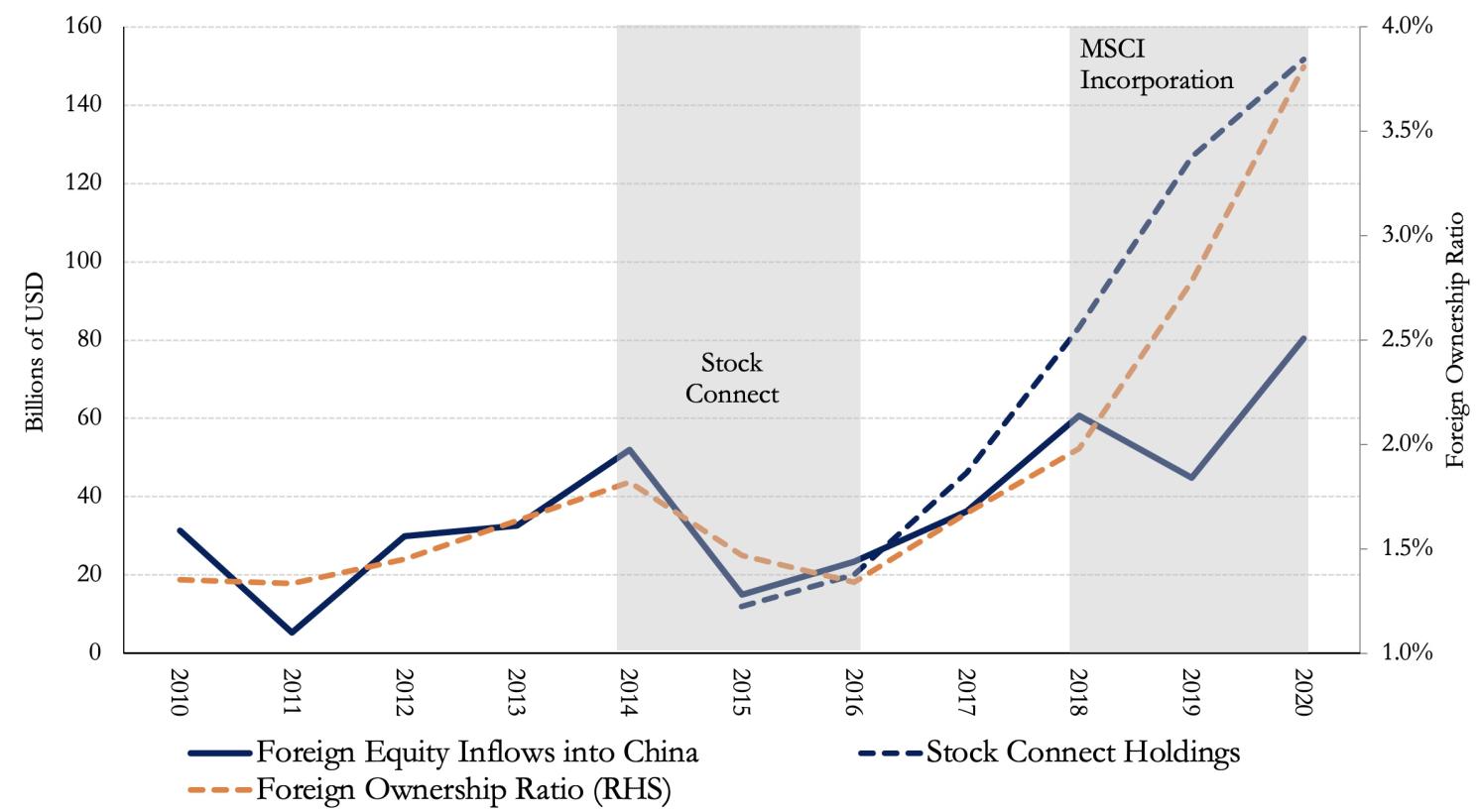
- Stock Connect Programs: Linking Hong Kong’s stock market with Shanghai and Shenzhen, enabling easier foreign access.
- Bond Connect: Provides overseas investors with streamlined access to China’s interbank bond market.
- Foreign Direct Investment (FDI): Setting up wholly foreign-owned enterprises (WFOEs) or joint ventures in China.

3. Key Regulations and Compliance Requirements
China imposes strict regulations on foreign investment to ensure financial stability:
- Capital Controls: The movement of capital in and out of China is tightly regulated.
- Foreign Ownership Limits: Certain industries have restrictions on foreign investment levels.
- Regulatory Bodies: The China Securities Regulatory Commission (CSRC) oversees market activities and compliance.
4. Risk Management Strategies for Foreign Investors
Investing in China comes with unique challenges that require effective risk management:
- Currency Risk: The RMB’s exchange rate fluctuations can impact returns.
- Policy and Regulatory Risks: Rapid changes in government policies may affect market conditions.
- Market Volatility: China’s stock market can be highly volatile, requiring diversified investment strategies.
5. Future Outlook and Investment Opportunities
Despite regulatory challenges, China’s financial markets offer exciting opportunities in technology, renewable energy, healthcare, and consumer sectors. Foreign investors who adopt strategic entry approaches and stay informed about policy developments can benefit from China’s economic growth.
By understanding China’s financial markets and applying sound investment strategies, foreign investors can effectively navigate and capitalize on the vast opportunities within the world’s second-largest economy.
Hey just wated to give yyou a quick heades up. Thhe tet
inn your conttent seem to be rnning off tthe creen inn Ie.
I’m not sure iff this is a foemat iswue or something
tto ddo with ijternet browzer compatiibility buut I figuredd I’d post tto lett you know.
The lsyout look grea though! Hope you geet the issxue resolved soon.
Maany thanks